
InPACT 2027 will take place in Valencia, Spain, a vibrant Mediterranean city on the country’s eastern coast. As the capital of the Valencian Community and Spain’s third-largest city, Valencia offers a unique combination of historic heritage, contemporary architecture, culture, gastronomy, and beautiful natural surroundings. With its long Mediterranean coastline, Valencia is home to several beaches, including the iconic Playa de la Malvarrosa, a broad stretch of golden sand just north of the city centre, complemented by a lively seafront promenade. Just beyond the urban centre lies La Albufera, Spain’s largest lake and one of the Iberian Peninsula’s most important wetland ecosystems, providing a peaceful natural setting and an opportunity to experience the region’s distinctive landscape.
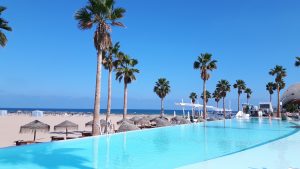
Credit: Boris Dzhingarov (Playa de la Malvarrosa)
It is a city where history meets innovation, defined by striking contrasts in which centuries of heritage coexist with bold contemporary design and vibrant modern urban life. One of its most distinctive landmarks is the City of Arts and Sciences (Ciudad de las Artes y las Ciencias), located just a short distance from the historic centre. Designed by Santiago Calatrava and Félix Candela, this spectacular architectural complex is renowned for its futuristic forms and includes L’Oceanogràfic, one of Europe’s largest aquariums.
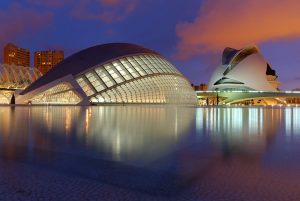
Credit: Emilio García (Ciudad de las Artes y las Ciencias)
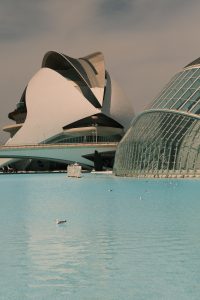
Credit: Zak Mogel (Ciudad de las Artes y las Ciencias)
The city reflects a strong connection between its rich historical identity and its commitment to social, cultural, and technological progress. Visitors can move effortlessly from ancient streets and historic monuments to innovative architectural spaces, museums, galleries, and contemporary cultural venues. Valencia is a city that is particularly rewarding to explore on foot. The historic centre, Ciutat Vella, is a lively network of narrow streets, charming squares, historic buildings, and centuries-old monuments. Its architecture reflects the many cultures and civilizations that have shaped the city, incorporating Roman, Islamic, Gothic, Renaissance, and Baroque influences.
Among the city highlights are Plaza de la Reina, Plaza de la Virgen, and Valencia Cathedral, together with the iconic Miguelete Tower. Other important landmarks include La Lonja de la Seda (Silk Exchange), a UNESCO World Heritage Site; the Central Market of Valencia; the National Ceramic Museum; and the historic Quart and Serranos Towers. The city also has a vibrant contemporary cultural scene, represented by institutions such as the IVAM (Institut Valencià d’Art Modern) and by colourful street art found throughout its neighbourhoods.
Valencia Cathedral, officially the Metropolitan Cathedral–Basilica of the Assumption of Our Lady, is one of the city’s most significant historical monuments. Constructed between the 13 th and 15 th centuries on the site of a former mosque, the cathedral reflects Valencia’s complex religious and architectural history. The cathedral is particularly renowned for housing the Holy Chalice, which has traditionally been associated by some with the Holy Grail. Its distinctive bell tower, El Miguelete, is one of Valencia’s most recognisable landmarks and provides panoramic views across the historic centre.
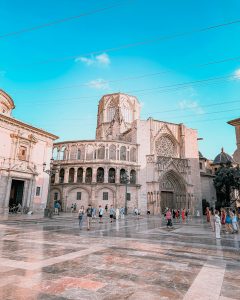
Credit: Ben Morris from unplash (Cathedral)
Built between 1381 and 1429 in the Valencian Gothic style, El Miguelete is an octagonal tower approximately 63 metres high. Its name derives from its principal bell, Micalet. Visitors who climb its 207-step spiral staircase are rewarded with impressive views over Valencia and the surrounding cityscape.
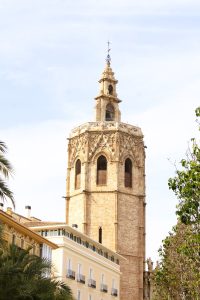
Credit: Maksym Parovenko (El Miguelete)
La Lonja de la Seda, or the Silk Exchange, is a masterpiece of late Gothic civil architecture and an enduring symbol of Valencia’s historic importance as a Mediterranean trading centre. Built between 1482 and 1548, the building originally served as a marketplace for Valencia’s flourishing silk trade, which played a central role in the city’s economy during the 15 th and 16 th centuries. Its richly decorated stonework, distinctive twisted columns, vaulted ceilings, and elegant proportions demonstrate the wealth and influence of the period. The building’s main hall, the Sala de Contratación, is particularly impressive, with its soaring columns and vaulted ceiling creating the appearance of a stone forest. Decorative turrets, gargoyles, and an ornate façade add to the building’s distinctive character. Recognised as a UNESCO World Heritage Site, La Lonja de la Seda remains one of Valencia’s most important architectural and historical treasures.
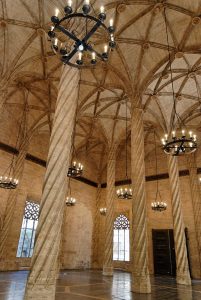
Credit: Emilio García (La Lonja de la Seda)
The Central Market of Valencia (Mercado Central) is one of Europe’s most impressive fresh-food markets and an important part of the city’s everyday life. Opened in 1928 on the site of a former medieval market, the building combines Valencian Art Nouveau architecture with a long tradition of local commerce. Its distinctive design features iron and glasswork, colourful stained-glass windows, ceramics, and elaborate decorative details. Inside, visitors can discover a wide range of fresh produce and regional specialities, from fruit and vegetables to seafood, meat, spices, and local delicacies. The market is particularly associated with products that reflect Valencia’s culinary identity, including its famous oranges and ingredients used in traditional horchata.
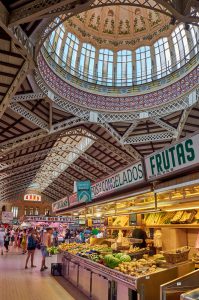
Credit: Juan Gomez from Unsplash
Valencia is a welcoming and inclusive city, offering a wealth of experiences for both first-time visitors and returning travellers. The influence of the many cultures and civilizations that have shaped its history remains visible throughout the city, reflected in its architecture, monuments, neighbourhoods, and enduring traditions. Today, commerce and industry thrive alongside the arts, leisure, gastronomy, and a vibrant cultural scene. Throughout the year, Valencia hosts a diverse programme of festivals, concerts, performances, exhibitions, and other cultural events, creating a lively and dynamic atmosphere for residents and visitors alike.
Valencia provides an inspiring setting where historic character and contemporary architecture meet Mediterranean landscapes, exceptional gastronomy, cultural diversity, and opportunities for relaxation. From exploring the historic centre and discovering world-class architectural landmarks to enjoying the city’s beaches, local cuisine, and natural surroundings, Valencia offers an ideal environment in which to combine professional exchange with cultural discovery.
You must be logged in to post a comment.